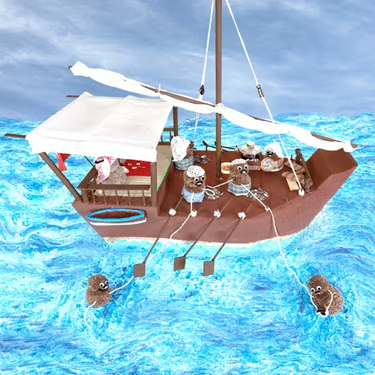
Diving was one of the professions practiced by our ancestors in Kuwait, and it was their only source of livelihood and income in the past. Diving was a tiring profession with many risks for those working in it, whether divers or assistants (Seeb). This work required high physical fitness and courage. Many tried to work in this profession, but sometimes they could not continue due to its hardship, and some would escape once they reached land.
1. Khanjiya: The first diving season, taking place at the end of spring in April. Their ships stayed close to the shore and were few in number, in the nearby “Adan diving spots.” Khanjiya diving was not subject to diving laws.
2. Diving: The well-known diving season, using both large and small ships. Large ships went to distant diving spots, while small ones stayed near the coast. This type was subject to diving laws.
3. Radda: Meaning returning again to dive, after the main season ended in September. Radda took place in October when the sea was cold. It was similar to Khanjiya diving, with fewer ships, mostly small ones.
4. Irdeida: Took place in November, when waters were very cold and close to the shores. It was short in duration and not subject to diving laws.
In Khanjiya, Radda, and Irdeida diving, the diver’s share was his own, and the captains (Nokhatha) did not take any money.
In the past, Kuwaitis prepared for the diving season. Before each season, divers registered with the captains they wanted to join. The Nokhatha would lend money to the sailors before departure (known as “Al-Dasha”), according to the amount set by the government. The diver took the loan and gave the money to his family to spend during his absence. Then divers and assistants bought the necessary equipment for diving, which included:
1. Fattam: A small piece of turtle bone placed on the nose to prevent water leakage.
2. Deen: A container made of ropes and wood for collecting oysters.
3. Khabbat: Leather worn on fingertips to protect them from cuts.
4. Hajar: A piece of lead to help the diver descend to the seabed.
5. Shamshool: A short black trouser allowing freedom of movement underwater.
6. Diving Suit: A long-sleeved black suit covering the body for protection from jellyfish.
7. Eida: A long rope used to pull the diver from the seabed.
8. Zaybel: A long rope used by the Seeb to pull the diver after reaching the bottom.
9. Tartoora: A long cap or head cover to protect the hair during diving.
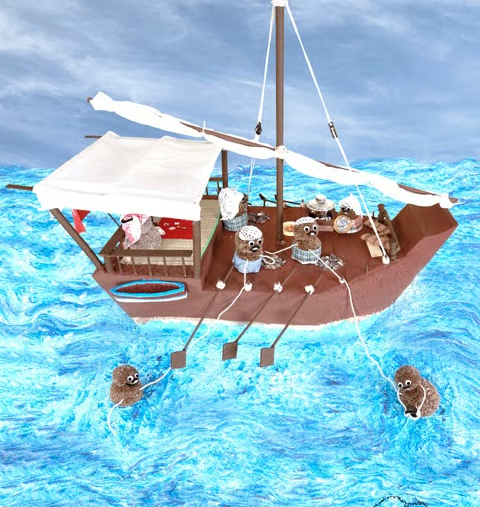
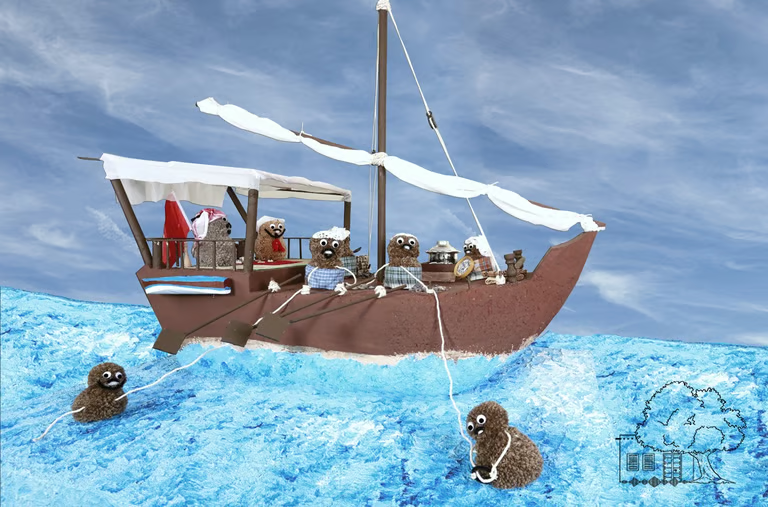
The term "Tuwashin" (plural of Tuwash) referred to pearl merchants in the past. They played a major role in developing Kuwait’s economy until it became a center for pearl trade. After the decline of the pearl industry, this profession disappeared. Among them were notable figures who played important roles in Kuwait’s history, such as the late Mohammed bin Ali bin Musa bin Asfour, the late Suleiman Al-Yaqoub, then another generation including the late Hilal bin Fajhan Al-Mutairi, the late Shamlān bin Ali and his brother Hussein bin Ali, the late Ibrahim bin Mudhaf, the late Abdulrahman bin Yusuf Al-Roumi, and many others. May God have mercy on them all.
In every diving season, the pearl merchants prepared for their work. The senior merchants sailed with their large ships to pearl diving grounds in Kuwait, Bahrain, Al-Ahsa, Qatar, and sometimes Oman, while the smaller merchants used small ships called (Challah). They carried provisions such as rice, sugar, and dates to sell to the divers for profit.
Among the most famous merchants who sold provisions were the late Issa Al-Qatami, Sheikh Hafiz Wahba of Egyptian origin, the late Abdullah bin Yaqout, the late Abdullah Al-Farhan, Sayyid Mohammed Al-Refaie, Abdullah bin Nasser Al-Roudhan, Hamoud Al-Roudhan, Ibrahim Al-Sayegh, Musa Al-Sayegh, and many others.
The merchants’ journey usually took place two months after the divers had departed, so that the divers could collect large quantities of pearls. The merchants had prior knowledge of fabric prices outside Kuwait, especially in Bahrain, the pearl trading hub of the Gulf, and in Bombay, the largest pearl market in the past. They often took their sons with them to gain experience in this profession.
Life on the merchants’ ships was comfortable, with good, clean food available. They ate two meals daily, lunch and dinner, and each ship had a skilled cook. The food was mostly fresh fish, along with fresh water, coffee, and tea. Some senior merchants, such as the late Shamlān bin Ali Al-Seif, even brought a goat with them to provide milk.
Sailors agreed on a fixed wage ranging between 100 to 200 rupees, and sometimes up to 400 for the entire voyage (known as Al-Tarsha). The wage depended on the size of the ship and the status of the merchant. The number of sailors ranged from five to ten, and could reach twenty on larger ships.
After purchasing pearls, they were sorted according to size, color, and roundness. The merchants used special tools such as:
- Tous: Copper containers with holes of different sizes used to sort pearls.
- Scale: A highly sensitive scale to measure pearl weights, kept in a beautiful copper case. The weights were made of copper or agate, and the small pieces were known as “Mithqal” (plural: Mithaqil).
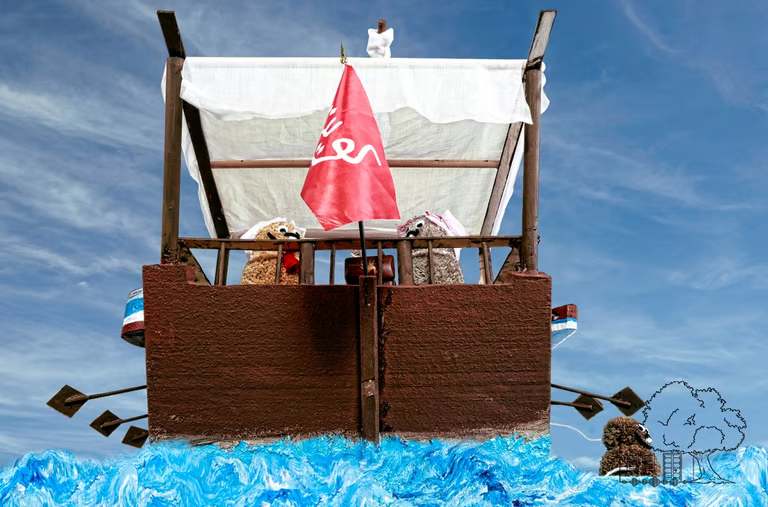
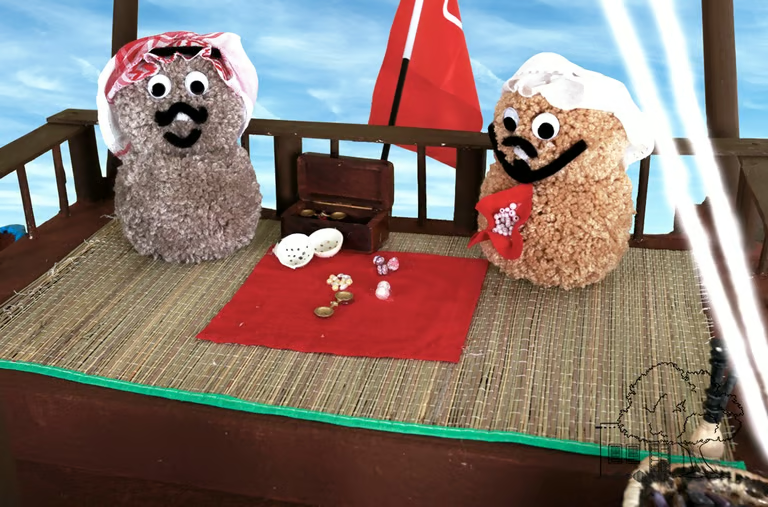
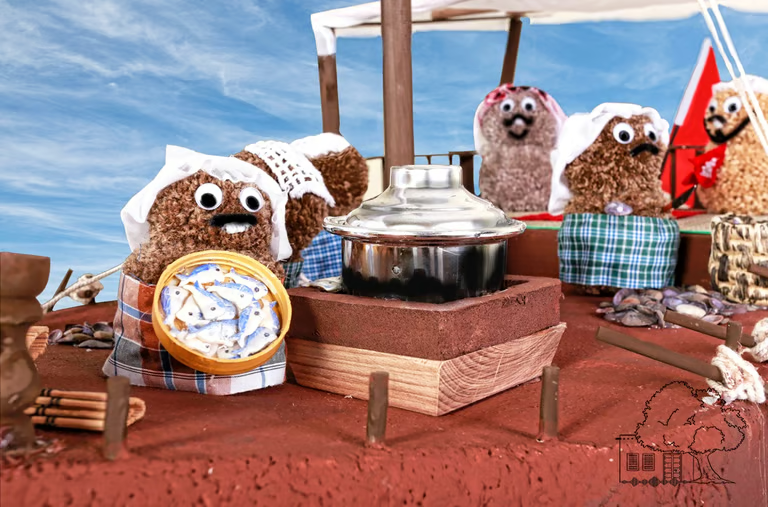
In the early morning, after diving and collecting oysters, divers and rope holders prepared to open them, a process called "Falaq Al-Mahal" (oyster opening). The oysters were opened using a special knife called "Mufallaqa." Everyone worked together to open oysters in search of pearls. Sometimes the oysters were abundant, so they were set aside for the rope holders to continue opening while the divers returned to the sea to collect more. When large quantities were gathered and the ship was full, divers stopped diving, a stage called "Yahlazoon."
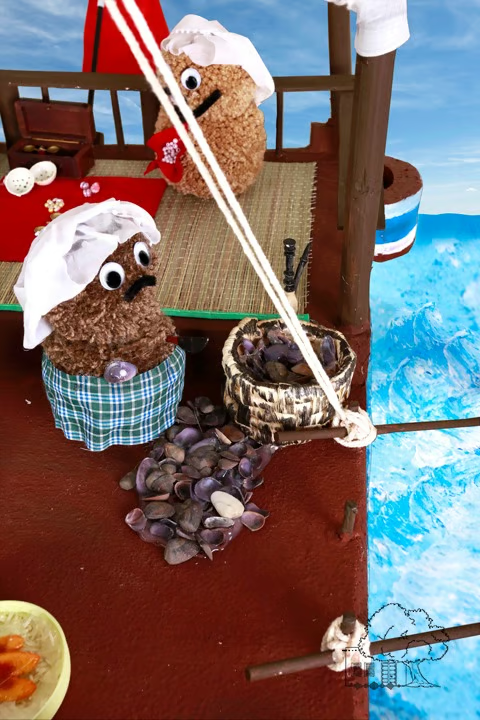
Early in the morning, after diving and collecting oysters, the divers and assistants prepared to open them, a process called “Falaq Al-Mahar” (oyster opening). The oysters were opened using a special knife called “Mufallaqa.” Everyone worked together to open the oysters in search of pearls. Sometimes the oysters were abundant, so they were set aside for the assistants to open while the divers returned to the sea to collect more. When large quantities were gathered and the ship was full, the divers stopped diving, a stage known as “Yahlazoon.”